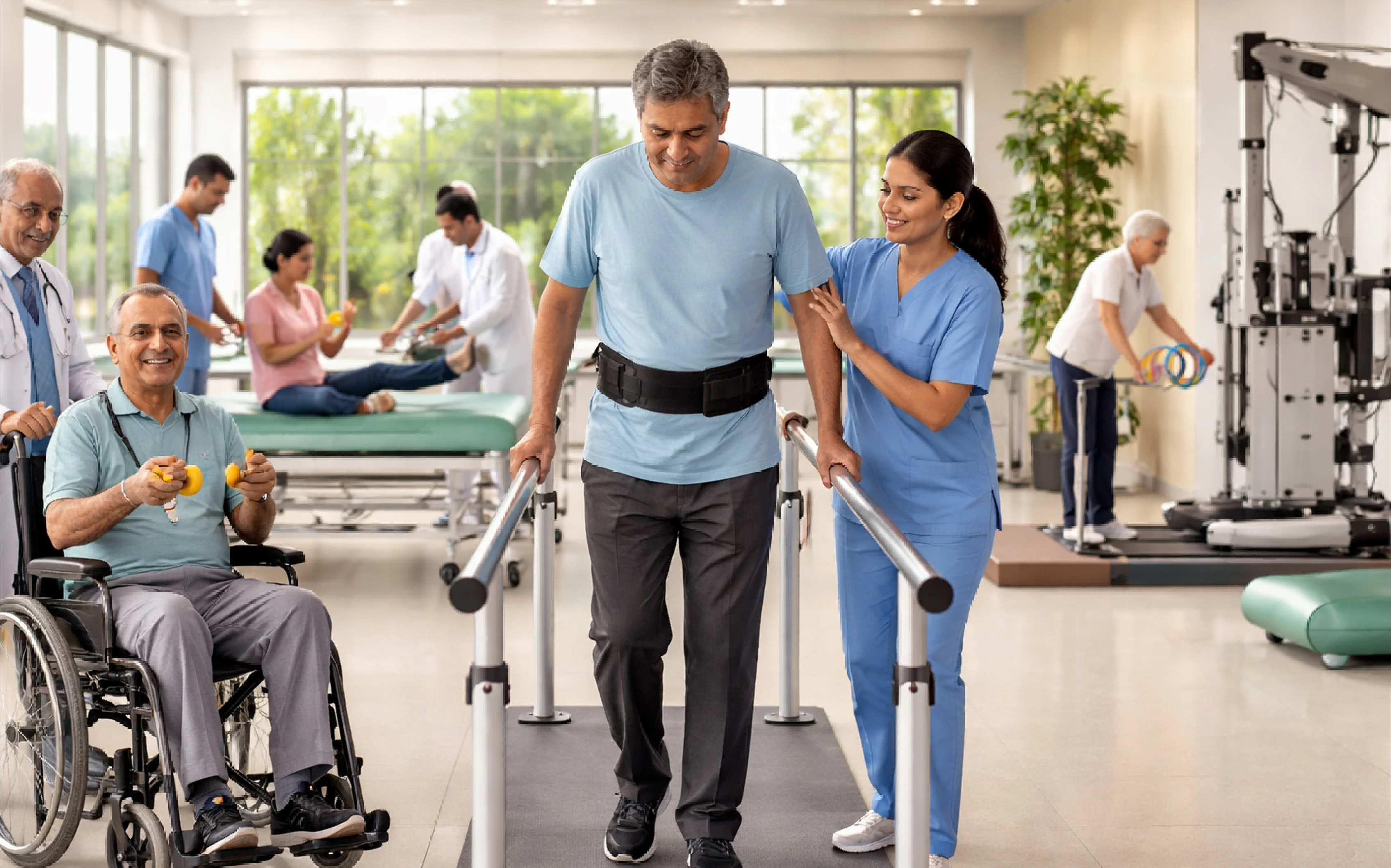
Millions of patients worldwide struggle every year with the long and laborious process of rehabilitation after such disorders.
Book an Appointment
Call Us +91 9958011121Paralysis is a medical complication that generally happens when the nervous system is affected due to a disease or injury affecting the brain or the nervous system. This condition affects the person's independence and mobility, ultimately lowering their quality of life. Paralysis rehabilitation aims to assist patients in regaining lost body control and abilities.
Are you looking for the best paralysis rehab for you or the one you are taking care of? Choosing the right paralysis rehabilitation center will determine the speed and extent of the paralysis recovery.
Walk Again, the advanced paralysis rehabilitation center in India, offers meticulously strategized, well-structured, and recovery-oriented rehabilitation programs based on the principles of neurostimulation (stimulation of damaged nerves) and neuroregeneration (repair and regrowth of nerve cells). Our personalized neurorehabilitation programs guided by experienced specialists help patients recover maximally after stroke, spinal cord injury, nerve damage, or any other neurological condition.
Paralysis, the inability to move voluntarily, can occur when something interrupts the signals that the nervous system sends to the muscles. Neurological diseases, such as multiple sclerosis, spinal cord injuries, and strokes, are common causes of paralysis. Some patients may suffer from temporary facial paralysis, known as Bell’s palsy. Mainly, paralysis is of two types: paraplegia and quadriplegia. Paraplegia affects both legs, while quadriplegia affects all limbs.
The following are the conditions that result in paralysis and require specialized neurorehabilitation for complete recovery:
| Category | Condition |
| Vascular disorders | Stroke |
| Bleeding in the brain (intracerebral hemorrhage) | |
| Transient ischemic attacks (TIAs) | |
| Infections | Polio |
| Meningitis | |
| Encephalitis | |
| Brain abscesses | |
| Trauma | Brain injury |
| Spinal cord injury | |
| Structural or neuromuscular disorders | Bell's palsy |
| Brain tumors | |
| Spinal cord tumors | |
| Guillain-Barré syndrome | |
| Muscular dystrophy | |
| Myasthenia gravis | |
| Degenerative disorders | Amyotrophic lateral sclerosis (ALS) |
| Multiple sclerosis | |
| Advanced Parkinson's disease |
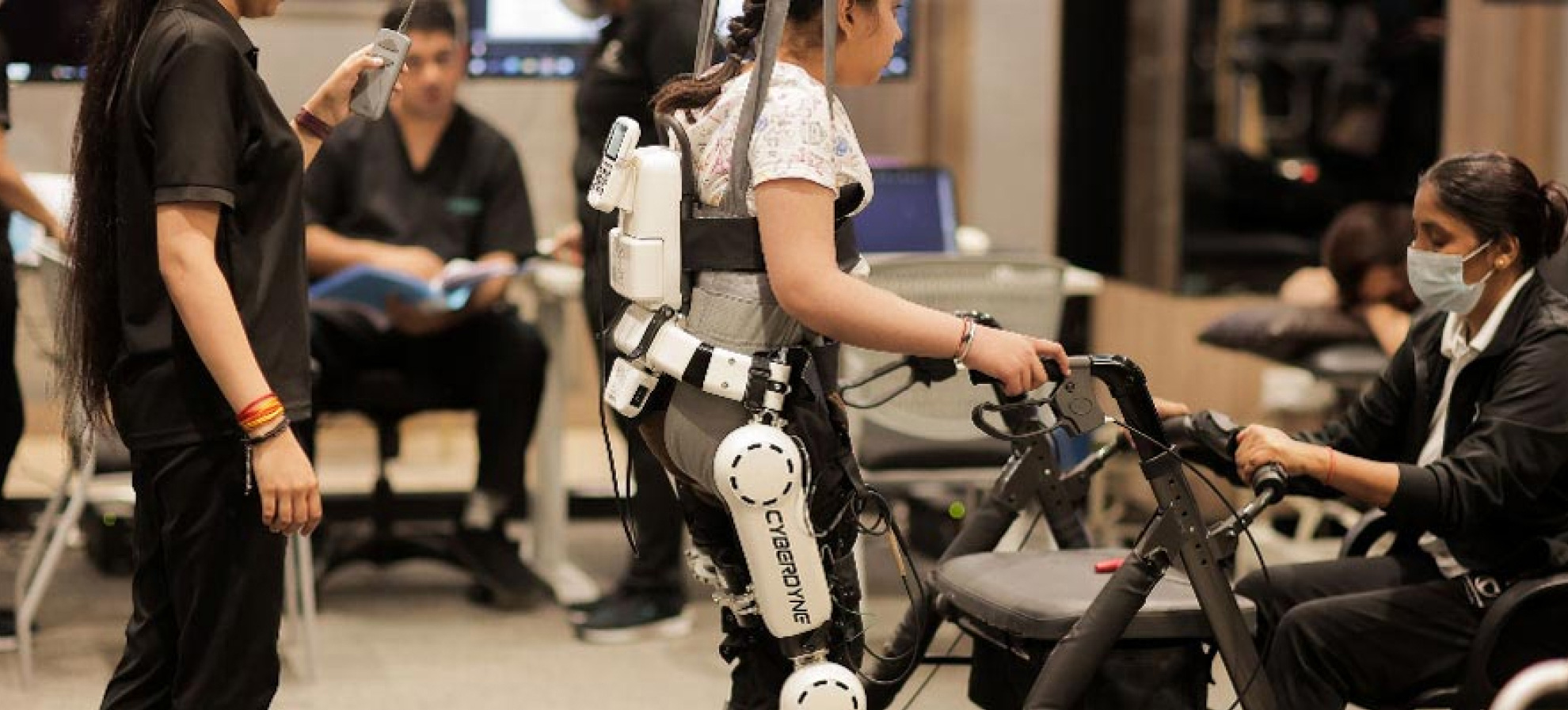
The concept of paralysis rehabilitation is based on the fact that our nervous system has a unique ability called neuroplasticity. With this, the damaged neural connections are reorganized and reformed. At our paralysis rehabilitation center, we plan repetitive and task-specific training by using neuromodulation techniques, including high-end training devices and electrical neurostimulation. With the targeted approach, residual neural circuits around the damage are strengthened to take over the charge of lost neural circuits. This plays a vital role in supporting functional recovery.
The following are the rehabilitation therapies used at Walk Again, an advanced paralysis rehabilitation center, for paralysis recovery:
At Walk Again Rehab, one of the top paralysis rehabilitation centers in India, we combine cutting-edge neuro-robotic technology, evidence-based therapy, and personalized care to help patients suffering from neurological conditions like paralysis reclaim movement, strength, and function.
Living with paralysis can be very challenging. Even temporary paralysis can have a giant impact on your ability to perform day-to-day activities. If paralysis happens suddenly, adjusting to such major changes in your life is often physically and emotionally overwhelming, requiring comprehensive medical and rehabilitative care.
Paralysis recovery rehabs can provide you with another opportunity to get back to your previous life maximally through training and relearning.
Choose Walk Again, the best paralysis rehabilitation center in India, for personalized paralysis recovery. Book your consultation now!
Q1: Can paralysis be treated completely?
A: Early and advanced rehabilitation can greatly enhance mobility and function. The cause and extent of paralysis greatly determine the level of recovery.
Q2: Is paralysis physiotherapy enough for complete recovery?
A: Incorporating neurostimulation, occupational therapy, and cutting-edge rehabilitation technology with physiotherapy is the most effective way to achieve the best possible results for paralysis.
Q3: When can I start paralysis treatment?
A: Incorporating neurostimulation, occupational therapy, and cutting-edge rehabilitation technology with physiotherapy is the most effective way to achieve the best possible results.