Millions of patients worldwide struggle every year with the long and laborious process of rehabilitation after such disorders.
Book an Appointment
Call Us +91 9958011121A stroke interrupts the blood flow to your brain. This damages cells in areas that control movement, leading to paralysis. When a stroke has occurred, paralysis generally affects the side of the body opposite to the area of brain damage because of crossed neural pathways.
These crossed neural pathways make left brain damage affect the right side, and vice versa. Paralysis after a stroke leads to weakness, balance issues, trouble performing daily tasks like eating/grooming, emotional challenges (depression, anxiety, frustration), cognitive deficits, and other functional issues.
A complete cure for paralysis after a stroke is not always possible; however, appropriate rehabilitation and supportive care can help manage symptoms and improve functional abilities.
Treatment for stroke paralysis at Walk Again focuses on individualized neurorehabilitation and approaches that support neuroplasticity, functional recovery, and greater independence. Depending on individual needs, rehabilitation may incorporate technologies such as robotic exoskeletons and virtual reality systems.
Our experts, like Dr. Sachin Kandhari, with 20 years of experience, are known to provide optimal recovery after the accurate diagnosis of the severity and holistic care.
Contact Us Now for Advanced Stroke Paralysis Rehabilitation
Here’s what happens
Something (a clot) in the blood vessels blocks the blood supply to the brain.
The blockage starves brain cells of oxygen. This lack of oxygen causes brain cells to die, especially in areas like the motor cortex (responsible for planning and executing movement).
The damaged area of the motor cortex in the brain can no longer receive or send signals to your muscles for movement.
This interrupted signal causes paralysis. Since the brain hemispheres control opposite sides of your body. Hence, damage to one side of the brain causes paralysis on the opposite side, meaning “right brain damage causes left-sided paralysis.”
Paralysis recovery after stroke depends on stroke severity, type, location, starting early intervention, intensive (physical, occupational, and speech therapy) rehabilitation, the patient's age and overall health, adherence to rehabilitation methods, and other individual factors.
Here are the Key Rehabilitation Therapies:
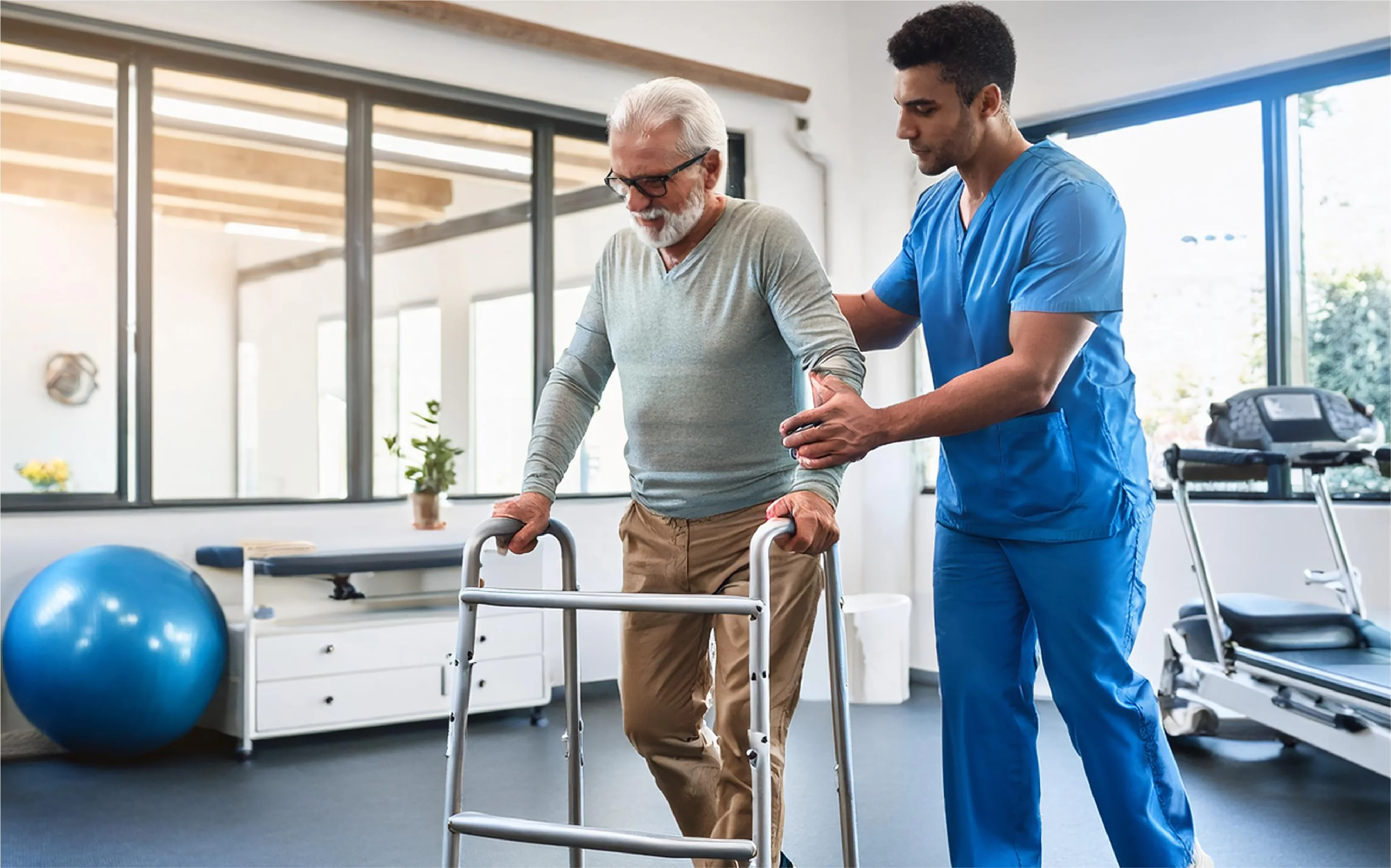
A physical therapist guides exercises focused on strength, balance, gait training, mobility, and body-weight support to help improve functional movement.
CIMT involves restraining the unaffected limb to encourage use of the paralyzed part. This helps promote brain relearning.
FES uses electrical currents to stimulate paralyzed muscles. This helps retrain movement and enhance coordination.
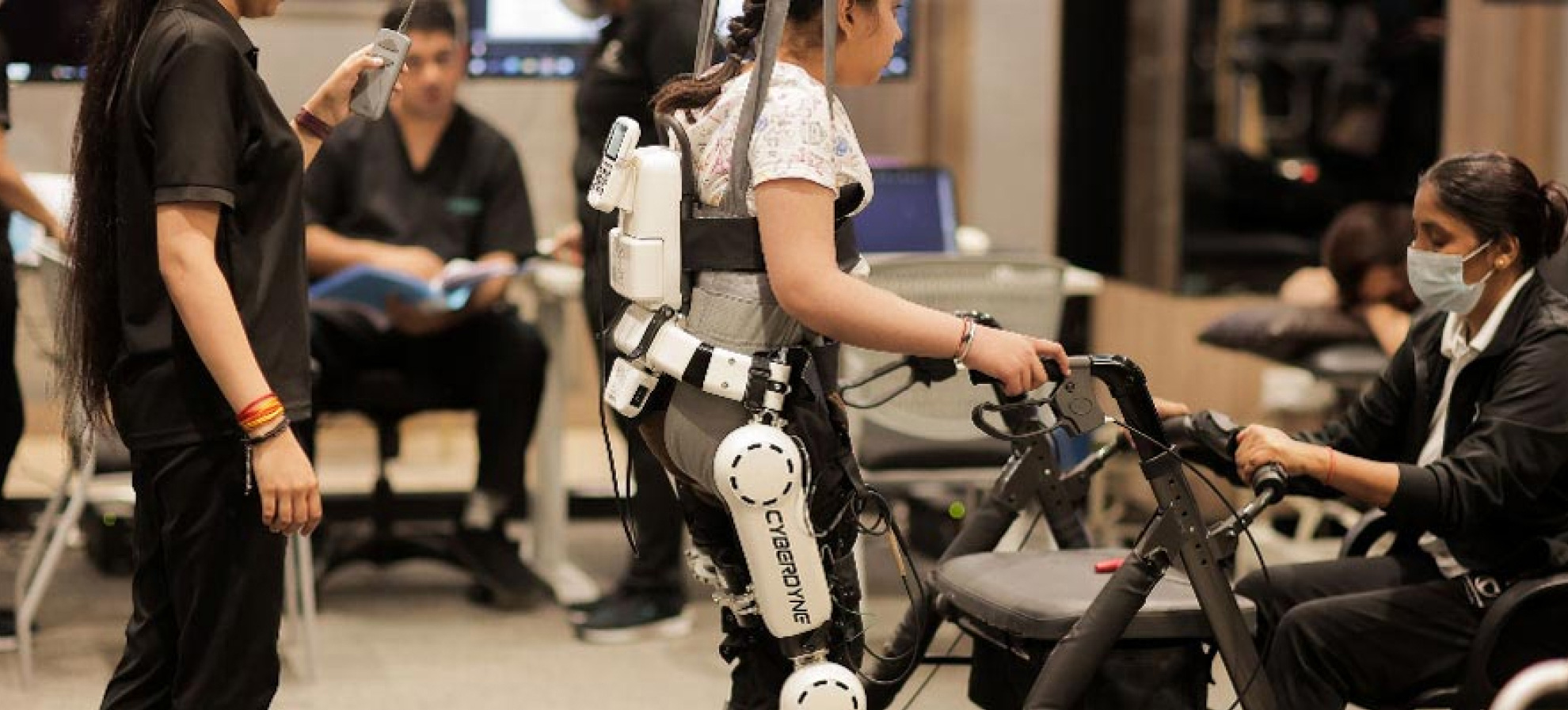
This involves wearable devices like Cyberdyne HAL) that support limbs. This helps guide repetitive motion for faster recovery.
The healthcare professional helps you trick the brain using a mirror into thinking the paralyzed limb is moving. This mirror therapy activates the brain areas for movement.
This involves the immersive, engaging, safe practice of real-world tasks for paralysis treatment by stimulating neuroplasticity (your brain’s ability to relearn) and motor learning.
The care team at Walk Again encourages repetitive practice of everyday activities, such as grasping and walking, to support functional recovery and help reinforce new neural pathways.
Focuses on the improvement of communication and swallowing function.
It is the noninvasive magnetic method. This helps promote brain plasticity.
These systems help translate brain signals into commands, enabling patients to regulate prosthetic limbs.
There is no fixed timeline for recovery after stroke. For some stroke survivors, rehabilitation may take several months to years, while others may require long-term management and support.
The emphasis is on medical stability and gentle therapy.
Focus on regaining walking, arm movement, speech, and other lost functions.
Long-term management and live an independent life
Walk Again is known as one of the best stroke paralysis rehabilitation centers in India because we offer holistic care for optimal paralysis recovery.
These Features Set Us Apart:
Our Experts:
Read the patient success stories here.
Ready to maximize post-stroke paralysis recovery effectively? Contact Walk Again at:
Q1: Can a stroke patient walk again?
A: Some stroke patients can regain the ability to walk through structured rehabilitation and physical therapy. However, the extent and speed of recovery vary from person to person depending on factors such as stroke severity, location, and overall health.
Q2: How much time does it take to recover from stroke paralysis?
A: The recovery journey varies from person to person. Significant improvements may occur during the first few months, but recovery can continue for months or years depending on the stroke’s severity, location, and the individual’s rehabilitation needs.
Q3: Is there recovery from a stroke?
A: Yes, recovery from a stroke is possible through a multidisciplinary approach like that achieved at the Walk Again rehab center, with many individuals regaining significant function.
Q4: How long is rehab after a stroke?
A: Recovery varies from person to person. The most rapid improvements often occur during the first few months after a stroke, but continued rehabilitation can support further progress for months or years.
This content was prepared by the Walk Again and Rehabilitation Team, a trusted healthcare provider in diagnosing and managing neurological conditions, including stroke. Every article is medically reviewed to ensure reliability and clinical accuracy.
This content is for informational use only. Contact your doctor for the right paralysis-related care.