Millions of patients worldwide struggle every year with the long and laborious process of rehabilitation after such disorders.
Book an Appointment
Call Us +91 9958011121Cerebral Palsy (CP) is a group of permanent disorders impacting body movement, posture, and muscle coordination. It's a lifelong condition; however, symptoms may change as a child grows.
Key Aspects:
Unmanaged Cerebral Palsy can lead to worsening physical limitations such as contractures, joint dislocations, and spinal deformities (scoliosis), eye muscle imbalance, increased pain, etc.; hence, timely treatment is required.
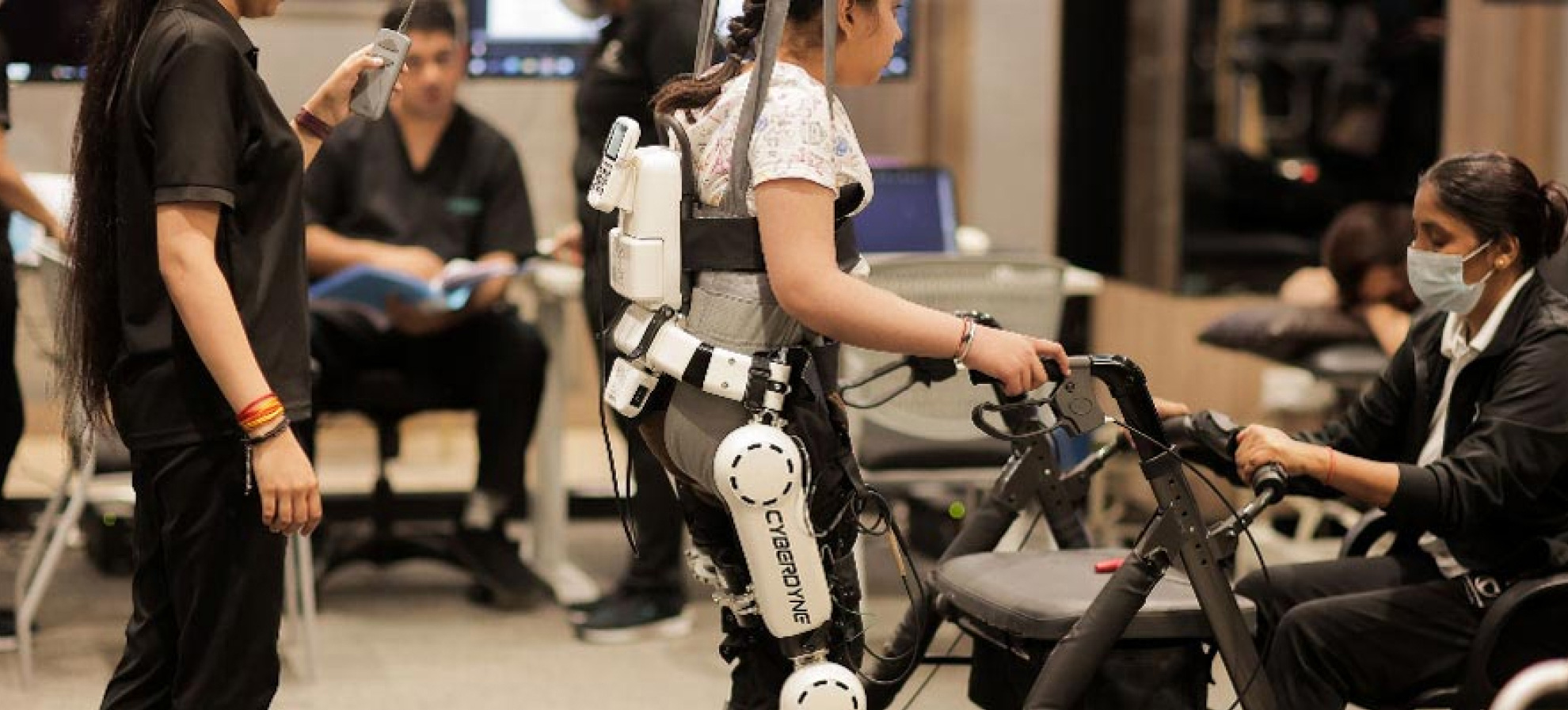
Cerebral palsy isn't curable, but with the right treatment, symptoms and effects are treatable. Treatment for Cerebral Palsy at Walk Again (child neuro rehab centre) comes with intensive physical, occupational, and speech therapies, gait training with advanced devices, and neurodevelopmental techniques. This helps maximize patient independence and improve quality of life through customized and hands-on approaches.
Our experts, like Dr. Sachin Kandhari, with 20 years of experience, are known to provide holistic care for cerebral palsy to enhance the outcome of the treatment.
How Neuro Rehab Can Help Children with Cerebral Palsy & Autism
Here is the simple explanation of how cerebral palsy leads to posture and/or a movement disorder:
CP happens from brain damage or abnormal development; it can generally occur before birth (most common), during birth, or within the first 2 years of life. This brain damage interferes with the brain's ability to communicate proper signals to muscles.
Damage to brain areas such as the basal ganglia or pyramidal tracts hinders communication between the motor cortex and spinal cord. This impairs movement control.
The impairment leads to:
The inability to control muscles makes:
Immediately contact your doctor if you notice the following symptoms in your child:
The treatment of CP individuals' unique symptoms, severity, age, and affected body areas. Child neuro rehab centers like Walk Again provide the following comprehensive rehabilitation care:
Which aim for:
OT trains for:
This therapy helps improve:
| Technique | How it Help |
| Robotic-Assisted Therapy | Uses robots to provide precise, repetitive movement training |
| Functional Electrical Stimulation (FES) | Uses electrical currents to activate and strengthen muscles |
| Virtual Reality (VR) | Uses interactive games to improve motor learning and cognitive skills |
| Constraint-Induced Movement Therapy (CIMT) | Encourages the use of affected limbs by restricting unaffected ones |
| Sensory Integration | Uses multi-sensory environments (e.g., Snoezelen rooms) to help process sensory stimulation |
Walkagain (the best child neuro rehab centre in Delhi) is backed by a team of specialists (neurologists, therapists, and psychologists). Our experts give the CP symptoms management program, which is holistic in nature addressing physical, cognitive, and emotional aspects of CP, involving family training and support.
Here is a Journey of Cerebral Palsy Rehabilitation at Walk Again.
Step 1 Early
Step 2 Complex
Step 3 Maintenance
Our Experts:
Read the patient success stories here.
Watch the cerebral palsy recovery journey.
Contact Walk Again at:
Our International Presence
Q1: Can you live a normal life with cerebral palsy?
A: Yes, people with the right management can live a more fulfilling, independent life.
Q2: Can cerebral palsy be treated?
a While there's no cure for cerebral palsy (CP), it's highly treatable. With the early and consistent therapy (occupational therapy, physical therapy, speech therapy, and behavioral support) significantly improves abilities, independence, and quality of life.
Q3: What is the main cause of cerebral palsy?
A: Happens before or during birth, known as Congenital CP. Sometimes it develops more than 28 days after birth, often because of head injury or infection, known as Acquired CP. Congenital CP accounts for 85-90% of cases; acquired CP accounts for a small percentage.
This content was prepared by the Walk Again and Rehabilitation Team, a trusted healthcare provider in diagnosing and managing neurological conditions, including stroke. Every article is medically reviewed to ensure reliability and clinical accuracy.
This content is for informational use only. Contact your doctor for the right Cerebral Palsy-related care.